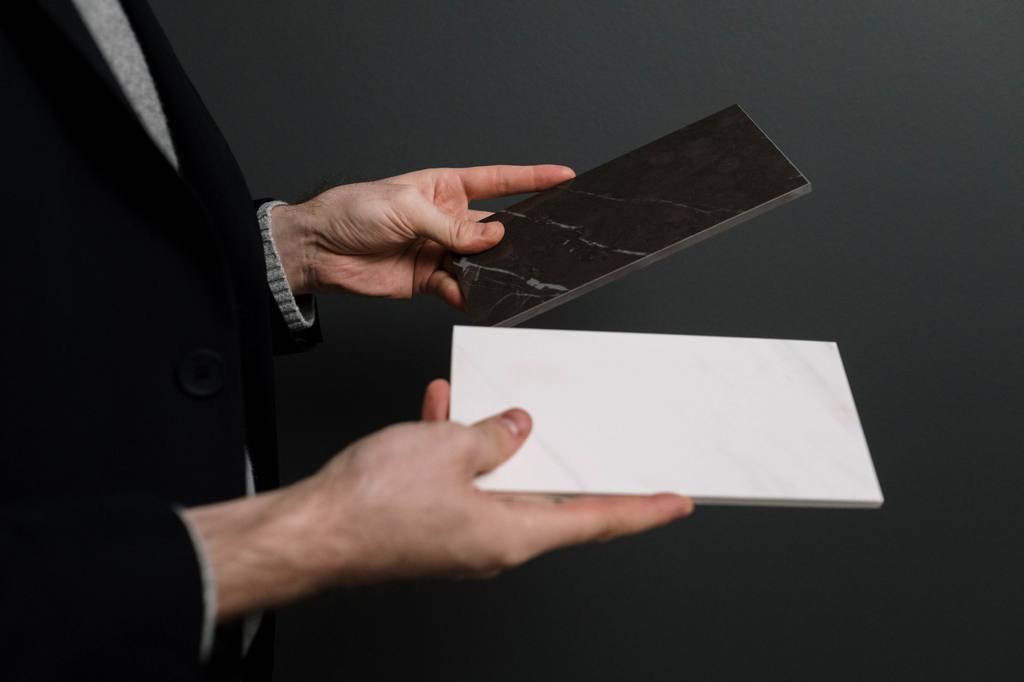
Photo by cottonbro studio on Pexels.
Walk into any London tile showroom and you will be shown hundreds of beautiful options, from slim metro tiles to slabs of marble-effect porcelain the size of a door. The choice that looks best on a display board is not always the one that suits a small, steamy, timber-floored bathroom in a Victorian terrace or a mansion flat. This guide compares the main materials, explains the slip-resistance ratings that matter for wet bare feet, sets out the published 2026 cost ranges, and flags the quote details that tell you whether a tiler knows their job. It does not repeat our guide to refreshing versus fully remodelling a bathroom. Sources were checked on 22 October 2026.
The materials, compared honestly
Ceramic
Glazed ceramic is the traditional wall tile: lighter, softer and easier to cut than porcelain, and generally the cheapest option. Checkatrade's tile flooring cost guide gives supply-only ceramic floor tiles at roughly £15 to £50 per m²; its tiling cost guide (updated June 2026) puts a typical ceramic tile at about £35 per m². Ceramic is ideal for walls outside the shower and for patterned or handmade looks. Not every ceramic tile is rated for floors - Checkatrade warns against using wall tiles on a floor unless they are specified for it.
Porcelain
Porcelain is a dense, fully vitrified ceramic. The European tile standard EN 14411 defines porcelain tile as having water absorption of 0.5% or less. That makes it the usual choice for floors and showers. Checkatrade's porcelain flooring guide (table last updated October 2026) gives supply-only prices of about £20 (budget), £35 (mid-range) and £60 (high-end) per m² for 9mm tiles, and a total installed cost of £60 to £130 per m², averaging £90. For a standard 5m² family bathroom floor it suggests £300 to £650.
Large-format porcelain
Big tiles - 600mm and larger - mean fewer grout lines and a calmer look, which is why they dominate showrooms. Checkatrade gives large-format tiles at £30 to £120 per m² supply-only, and notes they need a very flat surface. Its own tilers' advice is to avoid large-format tiles in a small room. In practice, out-of-true Victorian walls and springy timber floors can make large formats expensive to install well, because the substrate preparation is what costs money.
Natural stone and marble
Limestone, travertine, slate and marble bring genuine character, but they are porous, need sealing and resealing, and are less forgiving of acidic cleaners. Checkatrade's supply-only ranges are £30 to £100 per m² for natural stone and £60 to £200 per m² for marble; MyBuilder's bathroom tiling guide (updated 21 August 2026) gives natural stone, slate and marble at £40 to £85 per m². Stone is also heavier, and floors need to be stiffer: BAL's technical note on deflection gives L/720 of the span as the commonly accepted limit for natural stone, against L/360 for ceramic. On an upper floor in a period house, that can mean extra work under the floor before a single tile goes down.
Mosaic and patterned tiles
Mosaics are cheap to buy per sheet and expensive to fit. Checkatrade gives £30 to £150 per m² supply-only; Costwise's bathroom tiling guide (prices reviewed July 2026) puts mosaic at £90 to £120 per m² supplied and fitted, "priced on labour more than tile". Mosaic is excellent for small, sloping shower floors because the many grout joints add grip and follow falls easily. Victorian-style patterned floor tiles average around £200 per m² in Checkatrade's guide.
What the price guides say in 2026
All figures below are UK-wide published ranges, not quotes. Checkatrade itself notes that "it's quite typical for a tiler to charge more in London and the South", so expect London quotes to sit towards, or above, the top of each range.
- Tiling a whole bathroom (walls and floor): about £800 to £1,200 on average, taking 3 to 4 days (Checkatrade, June 2026); £500 to £1,500 for most jobs, with £700 to £2,500 to re-tile (MyBuilder, August 2026).
- Labour: about £50 per m², £40 an hour, or £200 to £350 a day (Checkatrade); £20 to £40 per m² for straightforward work and £30 to £60 for stone or bespoke designs (MyBuilder).
- Supplied and fitted, by type: ceramic £40 to £65, porcelain £55 to £85, large-format porcelain £70 to £100, natural stone £85 to £120, mosaic £90 to £120 per m² (Costwise, July 2026).
- Pattern premiums: straight lay £40 to £60, diagonal £50 to £70, herringbone £65 to £85, basket weave £70 to £90 per m² (MyBuilder).
- Tiling a shower enclosure: £250 to £900 (Checkatrade).
- Hidden extras: removing old tiles £20 to £40 per m², subfloor levelling or waterproof membranes £30 to £50 per m², adhesive, grout and silicone £10 to £20 per m² (MyBuilder).
Two budgeting habits are worth borrowing from these guides: buy surplus tiles - MyBuilder suggests about 10%, Checkatrade 15% - from the same batch, and keep a contingency of 10 to 15% for what is found when the old tiles come off.
Slip resistance: the number that actually matters
Bathroom floors are used with wet, bare, soapy feet - the worst conditions for slipping. Tile boxes and websites quote a confusing mix of ratings, so it helps to know which ones mean what.
- Pendulum test value (PTV). HSE's guidance on assessing the slip resistance of flooring classifies a PTV of 36 or above as low slip potential, 25 to 35 as moderate and 24 or below as high. Ask for the wet value.
- Barefoot testing. The UK Slip Resistance Group's overview of standard requirements notes that HSE would test barefoot areas with the pendulum using a softer slider (slider 55) and shod areas with slider 96, and recommends both dry and wet testing.
- R ratings (R9 to R13). These come from a ramp test with boots and oil. The UKSRG stresses there is "no correlation" between ramp results and the pendulum, so an R10 tile tells you little about wet bare feet.
- A, B, C barefoot ramp classes. These come from a barefoot ramp test with soapy water - more relevant than R ratings, but again not convertible to PTV.
A polished porcelain or honed marble tile can look superb and still be slippery when wet. If a supplier cannot give you a wet PTV, treat a highly polished floor tile with caution - especially for children, older relatives or a walk-in shower.
Practical choices that save money later
- Grout colour: Checkatrade's tilers warn that white grout on floors shows dirt quickly; a mid-tone is more forgiving.
- Rectified tiles are machine-cut to a precise size, allowing joints of around 2mm - smart, but they need a flat background.
- Tile only where needed: fully tiling every wall is not essential. Concentrating tiles in the wet zones and painting the rest with a bathroom-grade paint can save a meaningful share of the budget.
- Underfloor heating under tiles adds cost and complexity; Checkatrade notes tilers may charge more, and BAL recommends an uncoupling layer and proper movement joints over heated floors.
- Behind the tiles: in showers, the background must be waterproofed with a proper tanking system - the Tile Association's summary of BS 5385-1:2018 says even moisture-resistant plasterboard is generally unsuitable for wet areas without it. No tile, however expensive, is a waterproofing layer.
Reading a tiling quote: what separates a craftsman from a cowboy
A careful tiler's quote will specify:
- the area in m² for walls and floor separately, and who supplies the tiles;
- removal of old tiles and how the background will be made good;
- the floor preparation - overboarding, levelling, uncoupling - and the wall background;
- the tanking system for wet zones, named;
- adhesive and grout types suited to the tile and substrate, and where movement joints will go;
- trims, cutting around sanitaryware, and sealing for natural stone;
- VAT, timescale and payment stages.
Warning signs include tiling straight over old tiles without discussion, no mention of the floor on a timber substrate, silicone used to fill gaps rather than as a movement joint, reluctance to say what goes behind the tiles in the shower, and pressure for full payment before the job is finished. As with any trade, check the business on Companies House if it is a limited company, ask for proof of public liability insurance, and pay by credit card where you can for deposits.
A sensible way to decide
Start with the floor: a porcelain tile with a published wet PTV of 36 or more, in a size your floor and room can take. Choose walls for looks - ceramic is usually fine outside the shower. Spend on stone or a statement pattern where it will be seen and touched, not across every surface. Then put as much thought into the background, the tanking and the tiler as you do into the tile itself. That is where London bathrooms either last for decades or start lifting within a year.
Sources (checked 22 October 2026): Checkatrade, How much does tiling cost in 2026? (updated June 2026); Checkatrade, Tile flooring cost calculator; Checkatrade, Porcelain tile flooring costs 2026; MyBuilder, The cost to tile a bathroom (updated 21 August 2026); Costwise, Bathroom tiling cost (reviewed July 2026); EN 14411:2016 overview; HSE, Assessing the slip resistance of flooring; UK Slip Resistance Group, Meeting standard requirements; BAL TN 07.24; The Tile Association, BS 5385-1:2018 changes. Prices are published guide ranges, not quotes.
Quick answers
Is porcelain better than ceramic for a bathroom?
For floors and showers it is usually the safer choice. Porcelain is defined in the European tile standard EN 14411 as tile with water absorption of 0.5% or less, so it is dense and hard-wearing. Ceramic wall tiles are perfectly good on walls and usually cheaper and easier to cut.
What slip rating should a bathroom floor tile have?
Ask for a wet pendulum test value (PTV). HSE guidance treats a PTV of 36 or more as low slip potential. For bare feet the UK Slip Resistance Group says the pendulum should be used with the appropriate barefoot slider. An R rating such as R10 comes from a shod ramp test with oil and cannot be converted to a PTV.
How much does it cost to tile a bathroom in 2026?
Checkatrade's June 2026 guide puts tiling the walls and floor of a typical bathroom at about £800 to £1,200 on average, and MyBuilder's August 2026 guide gives £500 to £1,500 for most jobs. These are UK-wide figures; Checkatrade notes tilers typically charge more in London and the South.